Selected work: how I solve design problems
Four case studies in product, brand, and web, plus the process, data, and judgment behind each. Built to show how I think, not just what I shipped.
My role is to research, concept, sketch, design, build, launch and test product pages and experiences from initial rough looks to asset creation, prototypes and page builds spanning from product pages to email, app halfsheets and even analog deliverables to bring a cohesive launch to life. I do this work alone and with talented team members pitching in depending on the scope, squad, brief and company.

My process, from brief to taste.
Drag the knob, or tap a stage, to move through how the work actually gets made.
Brief, not canvas
Every project starts as a brief in plain English: goal, audience, constraint, what success looks like, refined until the next move is obvious. The canvas only opens once the brief is that sharp.
Designing the moment money moves
Send is the heart of Cash App. I redesigned its marketing story so a single tap feels fast, safe, and unmistakably ours.
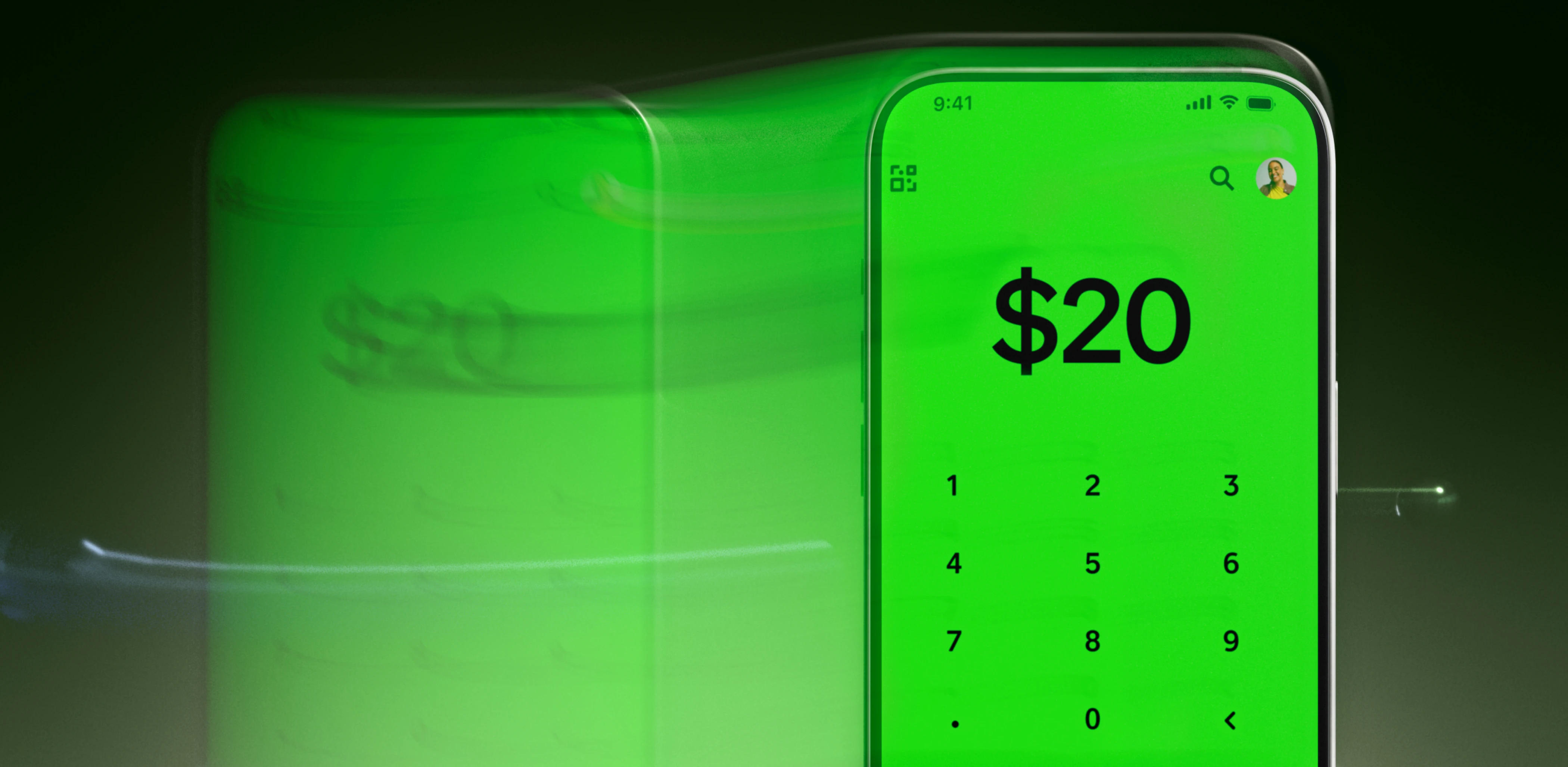
Cash App Send page.
A core action that had to feel effortless
Send is the reason most people open Cash App in the first place. But the page that explained it had drifted, heavy on features, light on the one feeling that matters: that moving money here is instant and safe.
The brief wasn’t ‘make it pretty.’ It was: make a first-time visitor believe a single tap will just work, before they ever download the app.
One clear promise, paced for trust
I cut the page to a single spine: show the tap, show the money land, show that it’s protected. Motion did the heavy lifting, restrained everywhere except the two beats that prove speed and security, so those moments actually register.
Every block was built as a reusable component, so the Send story could flex into campaigns without a rebuild. Real behaviour from the existing page set the priority order; my job was to make the most important promise the first thing you feel.
“Make the most important promise the first thing the visitor feels. Everything else is supporting cast.”
Cash App Send page.
The product had outgrown its homepage
A dated homepage was quietly telling visitors the product was dated too. I rebuilt the visual system to restore trust and reflect the real platform.
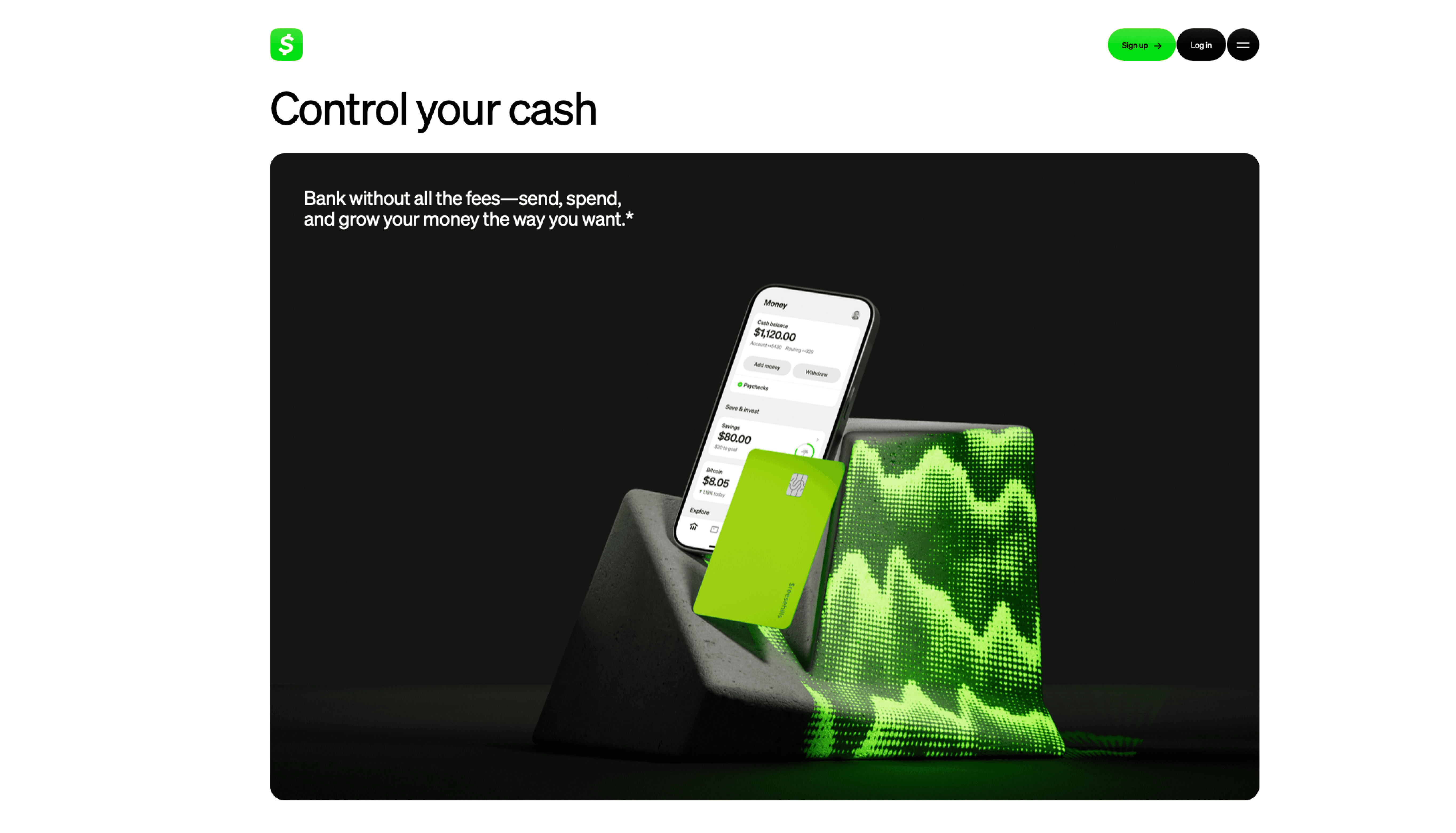
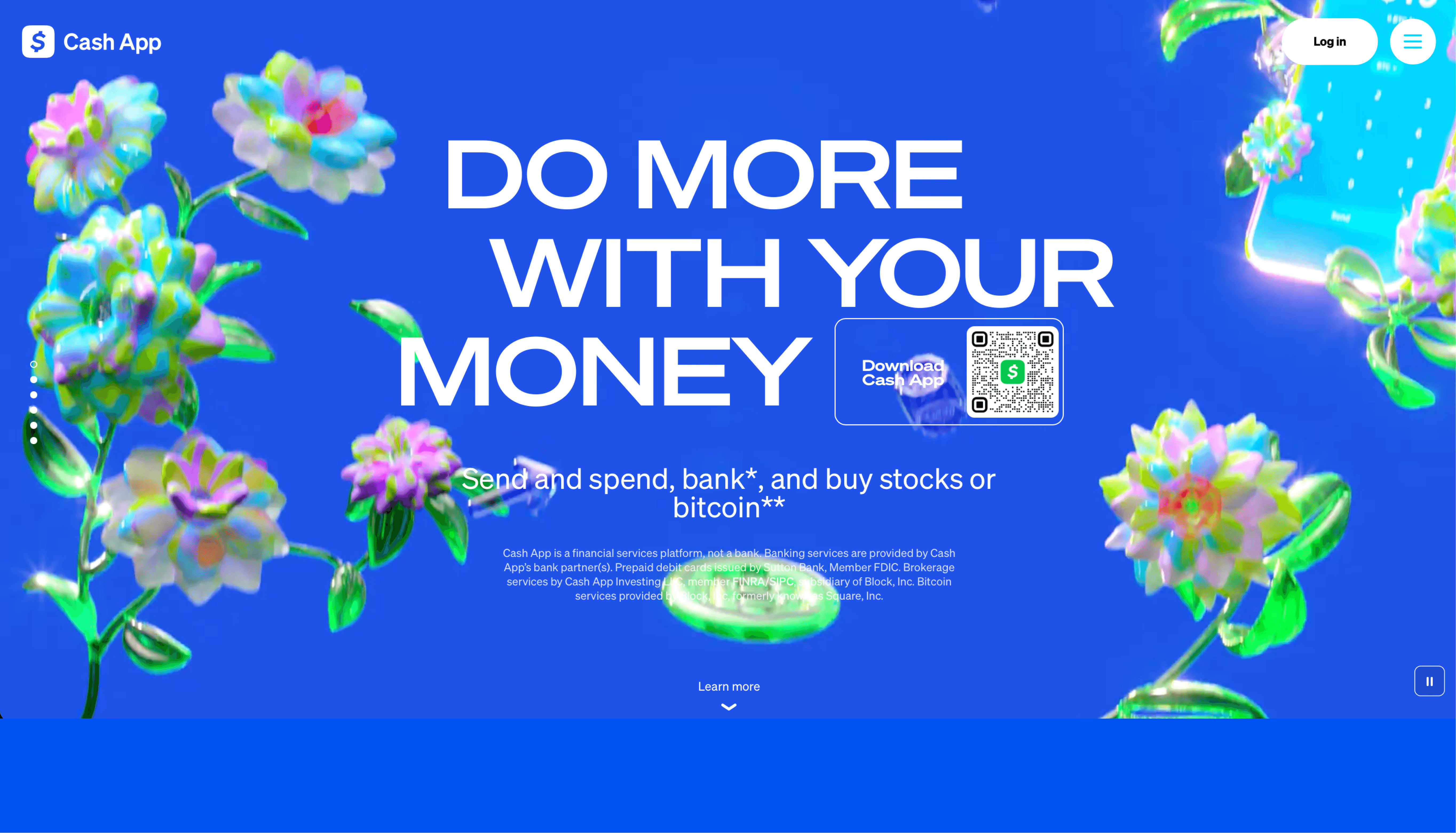
Drag to compare the dated Oct 2024 homepage vs. the rebuild.
The homepage was telling an old story
By October 2024, Cash App had spent years shipping new products and expanding what the brand could do. But the homepage hadn't kept up. The visuals felt dated closer to the scrappy peer-to-peer app of years past than the full financial platform Cash App had become.
That gap matters more than it looks. A homepage is the first handshake. When the visuals feel dated, visitors assume the product is too and trust erodes before anyone reads a word.
“A homepage is the first handshake. Dated visuals tell visitors the product is dated too.”
The approach: trust, built visually
Trust in a financial product isn't communicated with a badge that says trusted. It's communicated through craft typography that feels considered, spacing that feels calm, motion that feels intentional, components that feel engineered rather than assembled. I rebuilt the homepage's visual language around that idea.
Every surface was updated to a cohesive, modern component system: consistent type, refreshed color and imagery, and reusable blocks that could flex across the new product story. The result reads as more credible and more current a homepage that finally matched the sophistication of the product behind it.
“Trust isn't a badge you add. It's the sum of a hundred small craft decisions the visitor feels but never names.”
Live Figma file: the homepage system and components.
A design system that spoke engineers’ language
The vCluster rebrand didn’t start with components. It started with constraints, derived from who the product is really for.
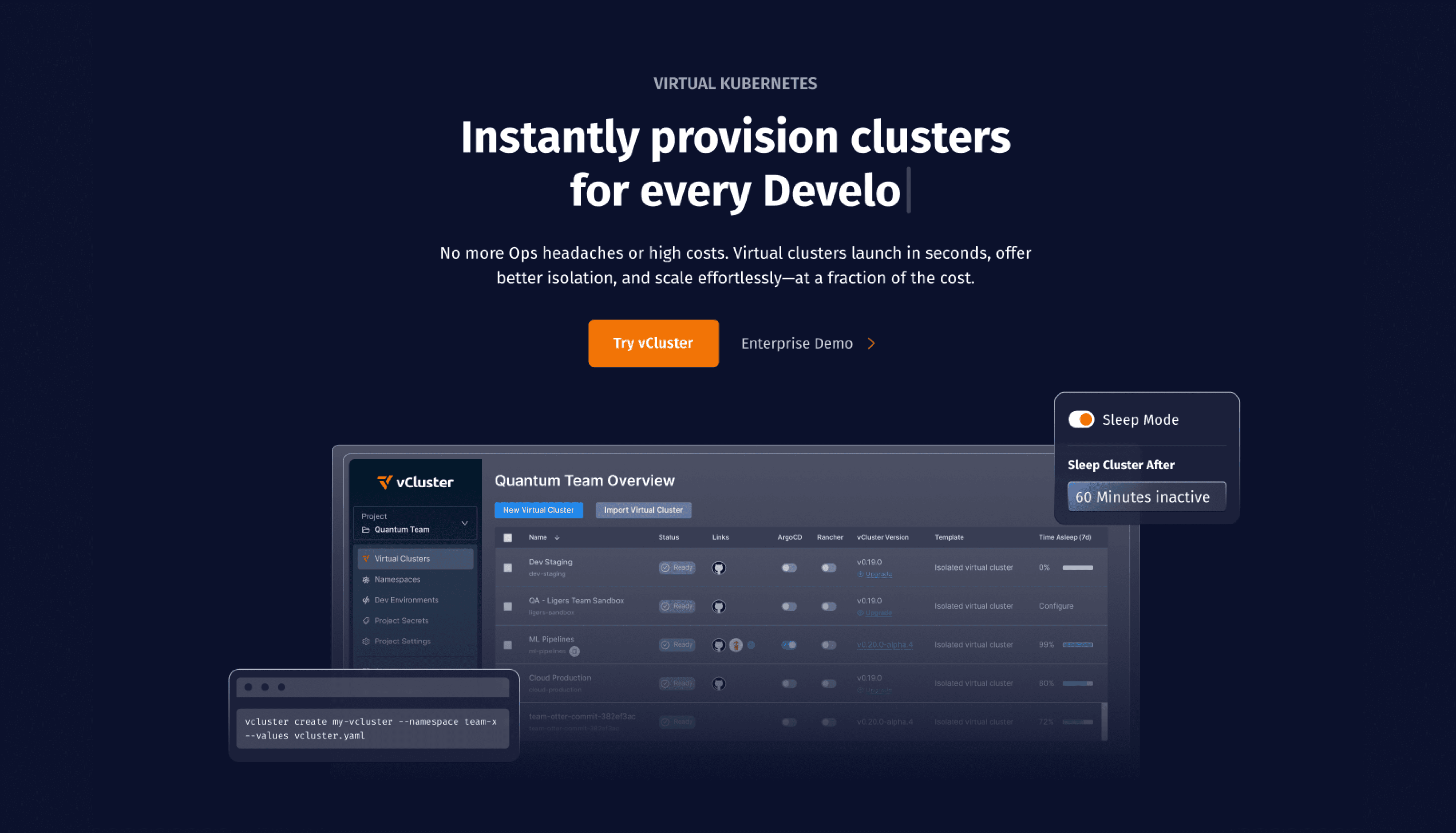
vCluster homepage.
Constraints before components
Most design systems start with a button and call themselves a system. What they’ve built is an inventory. When I joined to lead the vCluster rebrand, the ‘system’ was a pile of files in various states of truth.
vCluster’s users are DevOps engineers, people who trust precision over decoration and are suspicious of anything that feels more designed than useful. So before a single component, I spent two weeks on three questions: what must this brand communicate, who is it for, and what are the non-negotiables?
“A design system isn’t a library. It’s a language. Build the grammar first, then the vocabulary.”
Build the language first, the components follow
The answers became the system: a severely limited, functional palette, a monospaced face for technical content, a grid that holds dense information without feeling cramped, and motion reserved for state changes only. Every component was just a materialization of those decisions.
The system launched with the homepage redesign in late 2024; within sixty days the demo-request rate had tripled. But the real deliverable was a shared vocabulary: when designers and engineers could both say ‘tier-1 surface’ and mean the same thing, reviews and handoffs got dramatically faster.
vCluster Figma explore.
Eighteen months that reset my definition of done
Launch experiences for iPhone 13 and iPad. The visuals are under NDA, but the process is the part worth showing anyway.
Apple launch work, shown blurred. What follows is the process, not the pixels.
Precision was the baseline, not the achievement
At Apple, nobody congratulates you for getting the padding right or scaling type cleanly at every breakpoint. Those are simply expected, at every review, without exception. The question was never whether the work was precise. It was whether the precision served something worth serving.
Every decision passed through layers of review: brand, engineering, legal, marketing. The reviews that stung most in the moment produced the cleanest outcomes. The feedback wasn’t that my judgment was wrong; it was that the work wasn’t done yet.
“Precision without purpose is just expensive. Every detail had to earn its place by doing something for the person using it.”
The same operating system, on every project.
I read the data first, the analytics, heatmaps, and real behavior, so priorities come from evidence, not opinion.
I pressure-test with engineering and brand early, so what I design actually ships clean.
A decade of art direction tells me which decisions move the needle and which to cut.
Agentic AI workflows let me explore more directions and ship production-ready work faster. Taste stays human.
From artifact to decision
When you design for apple.com you design for hundreds of millions of people, on hardware and in languages you’ll never test. A one-pixel error that looks fine on your monitor breaks for sixty million people on a combination you didn’t imagine. You stop thinking of a design as a finished object and start thinking of it as decisions applied to contexts you can’t fully anticipate.
That shift, from artifact to decision, is the most lasting thing I took. I carry that standard into Cash App, vCluster, and everything I build: every decision defensible, every detail considered.
“At scale, your design isn’t what you made. It’s how your decisions behave in the hands of people you’ll never meet.”